




The Leading Executive Peer Communities in 2026: A Guide for Senior Leaders
At senior levels of leadership, traditional professional development tends to lose its relevance quickly.
Executives are not looking for frameworks or surface-level insights. They are operating in environments defined by complexity, high-stakes decision-making, and limited room for error. In that context, access to the right peers, people who understand the pressure, will speak plainly, and have nothing to gain from telling you what you want to hear, often becomes more valuable than any course, coach, or conference.
This is where executive peer communities sit within the modern leadership ecosystem.
Over the past decade they have evolved from niche forums into genuine professional infrastructure for senior leaders, used not only for networking but for decision support, perspective shifting, and leadership calibration. As the category has matured, it has also diversified. The options available today vary significantly in model, quality, and the type of leader they actually serve.
This guide covers the leading executive peer communities in 2026. The six organizations below are listed in order of establishment, oldest to newest, as a neutral point of reference rather than a ranking. Following the list is a separate section covering how the category is evolving and one newer model worth knowing about.
What separates a strong executive peer community from the rest
Format alone does not determine quality. The most effective communities for senior leaders tend to share a few consistent characteristics regardless of how they are structured.
The first is genuine curation. The quality of the room determines the quality of everything that happens in it. Communities that are selective about membership, and maintain that standard as they grow, consistently outperform those that prioritize scale.
The second is relevance at the right level. Conversations need to reflect the actual complexity of senior executive roles: strategy, organizational decisions, trade-offs under uncertainty, and the kind of pressure that does not appear in a business school case study.
The third is psychological safety. Senior leaders will only speak openly in environments where confidentiality is a genuine norm, not just a stated policy.
The fourth is continuity. The most valuable peer relationships are not built in a single meeting. They develop across multiple interactions, over time, in different contexts. Communities that create the conditions for that kind of relationship to form tend to deliver the most lasting value.
These are the factors worth weighing when evaluating any executive peer community.
Young Presidents’ Organization (YPO) (Established 1950)
YPO is one of the most recognized global executive peer communities, built around confidential forums and a broader international membership spanning more than 140 countries. The forum model, small groups meeting regularly in a confidential setting, remains central to its structure and is where most members find the deepest value.
Best for: CEOs under 45 seeking global peer networks and long-term forum relationships.
Worth noting that age-based eligibility criteria apply, and experience varies significantly by chapter and forum. The balance between social programming and strategic peer dialogue differs considerably depending on the group a member ends up in.
Vistage (Established 1957)
Vistage is one of the longest-established executive peer advisory organizations, with a track record spanning over 60 years and more than 23,000 members globally. Its model is built around small peer groups that meet monthly under the guidance of a trained chair, typically a former executive, with individual coaching between sessions.
Best for: CEOs and business owners of small to mid-sized companies seeking a structured peer advisory model with built-in accountability.
For the right leader, the rhythm is the whole point. The same room, the same people, month after month, builds a depth of trust that is genuinely hard to replicate. Leaders who want accountability built into their development, and who value individual coaching alongside group discussion, tend to get consistent value from Vistage’s model. The experience can vary depending on chair quality and group composition.
Entrepreneurs’ Organization (EO) (Established 1987)
EO is a global network structured around peer forums and learning programs, with a strong focus on the founder and entrepreneur experience. It operates across more than 60 countries and is often viewed as a founder-focused counterpart to YPO, with particular relevance during the scaling phase of a business.
Best for: Founders and entrepreneurs scaling beyond early-stage growth.
Less relevant for senior executives who have not come through a founder path. Depth of discussion tends to depend heavily on group composition and the specific chapter.
Tiger 21 (Established 1999)
Tiger 21 is a peer membership organization focused on investment strategy, capital allocation, and wealth preservation for individuals managing significant personal assets. The peer discussion model is structured and the trust environment is high, with members sharing portfolio details openly as a basis for peer review.
Best for: High-net-worth executives and entrepreneurs for whom personal wealth strategy is a primary focus.
Narrow in scope relative to broader executive peer communities, and the financial entry threshold is significant. Limited relevance to leaders whose primary development need is operational or organizational rather than wealth-focused.
World50 (Established 2004)
World50 operates as an invitation-only peer network for senior leaders at major global enterprises, structured around function-specific communities and high-trust peer exchange. The selectivity is genuine, the confidentiality norms are strong, and the membership is weighted toward C-suite executives at large, established organizations.
Best for: Enterprise C-suite executives at large global organizations.
More event-led than continuously engaged, and the membership process is less transparent than most other options in this category.
Chief (Established 2019)
Chief is a curated executive community focused on senior women leaders, built around small Core Groups supported by structured facilitation, leadership programming, and a growing digital platform. Founded in 2019, it has scaled quickly and now represents executives from more than 10,000 organizations.
Best for: Senior women executives at VP level and above.
Currently strongest in major US cities, with some variation in depth between the peer group and programming offerings depending on location and group composition.
How the category is evolving
The six organizations above represent well-established models, each built around the principle that bringing senior leaders into a structured room together creates value. That principle holds. But the category is shifting.
Senior leadership challenges do not arrive on a monthly schedule. Decisions emerge continuously, often in the space between meetings, often in response to something unexpected. And the most valuable perspective on those decisions rarely comes from someone inside the same industry or function.
A newer generation of executive peer communities has been built around those realities. Rather than concentrating value in a single recurring format, they are designed for continuous engagement, cognitive diversity, and relationships that develop across contexts and over time.
Blend is the clearest example of this in the current landscape.
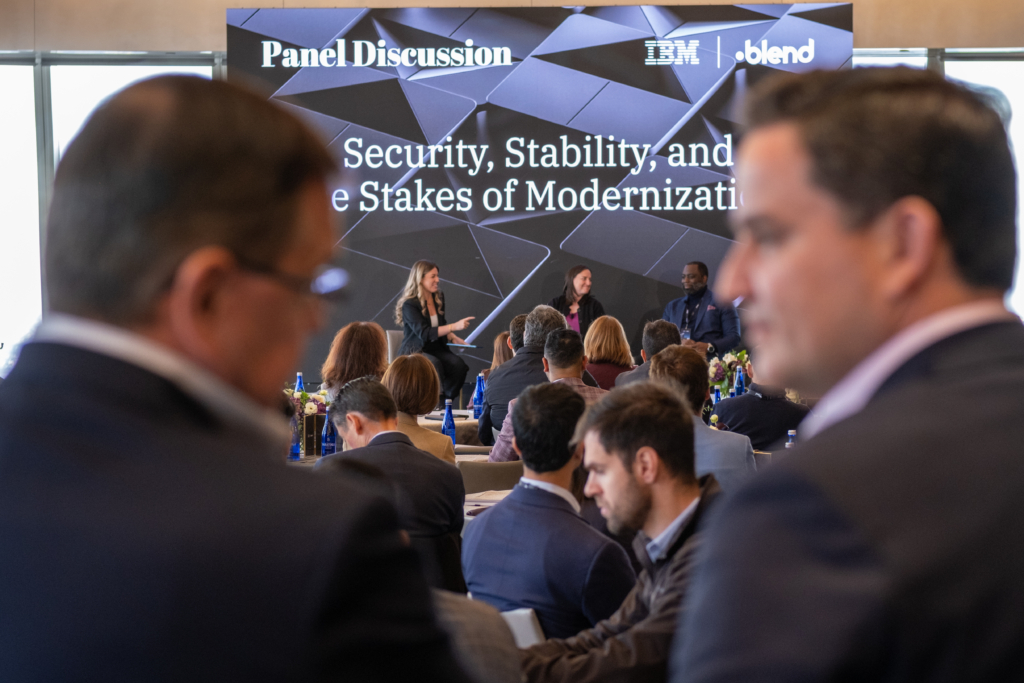
Blend is an invite-only executive community for VP-level leaders and above, built deliberately around a principle that most traditional peer groups do not prioritize: cognitive diversity.
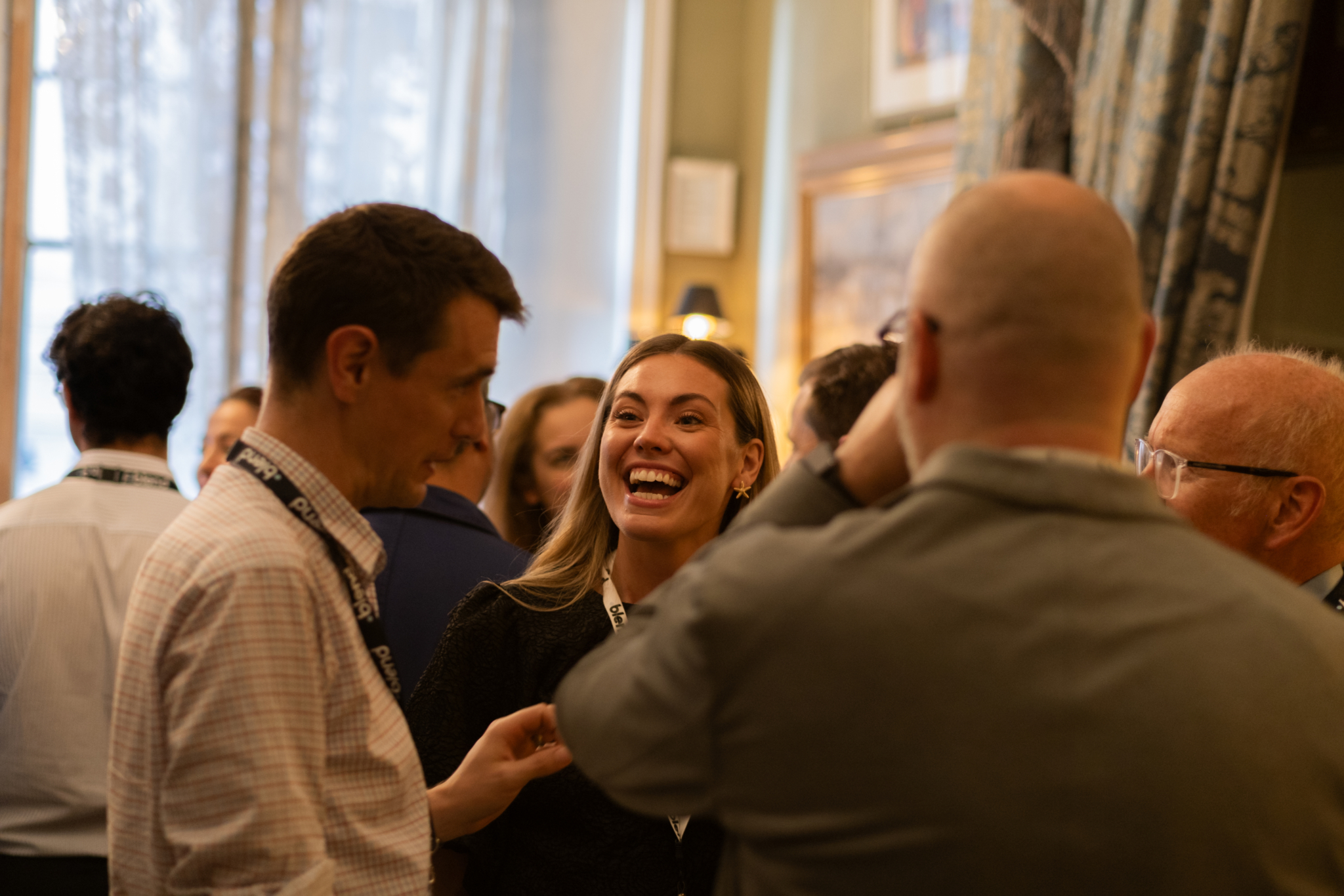
The community is cross-functional and industry-agnostic by design. A CFO sits alongside a Chief People Officer. A CMO compares notes with a COO from a global enterprise. A technology leader finds that a conversation with someone from healthcare or manufacturing shifts something they had been stuck on for months. The premise is that the perspectives most likely to move a senior leader’s thinking are rarely the ones closest to their own experience.
This is not diversity for its own sake. It is a structural choice about where insight actually comes from. And it shapes everything about how Blend’s membership is built and curated.
Membership is by application and rigorously vetted. Today, member across 12 global cities are part of the community, with more than 20,000 connections created between members. The community includes leaders from 78% of Fortune 100 companies across its wider network. Chapters operate in London, New York, Chicago, Toronto, San Francisco, Boston, Dallas and others, with over 200 events hosted annually.
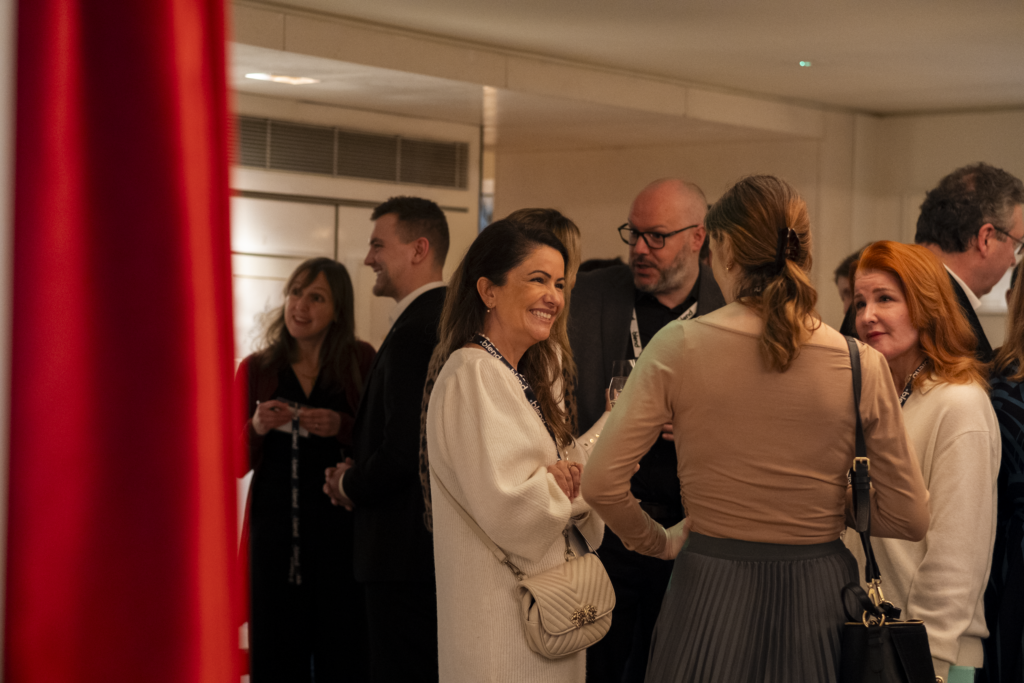
The model combines curated in-person experiences with a private online community, so the relationships formed at a dinner in one city continue long after the evening ends, in different contexts, across different challenges. That continuity is central to how the community works, and it is what members most consistently describe as its defining quality. Blend also offers a growing executive education program designed around the challenges that actually arise at the top of an organization.
For senior leaders whose primary development need is structured accountability in a recurring group format, the established organizations above are well-proven options. For those who want something different: a genuine peer community built around the kind of cross-functional, cross-industry thinking that is hard to find inside any single sector or function, Blend is worth a closer look.
A note on choosing
The most useful question is not which community has the strongest brand recognition. It is which model fits how you actually operate and what you are genuinely missing.
Some leaders do their best thinking in a structured, recurring format with built-in accountability. Others get more from fewer, better conversations on their own terms. Some want validation and execution support from peers dealing with identical challenges. Others want the perspective shift that only comes from outside their own world.
Both needs are legitimate. The communities above serve them differently. The right choice depends on which one reflects how you actually think, and what kind of conversation you are not currently having.